Does the Stability of Ozone Decomposition Catalysts Affect Their Service Life?
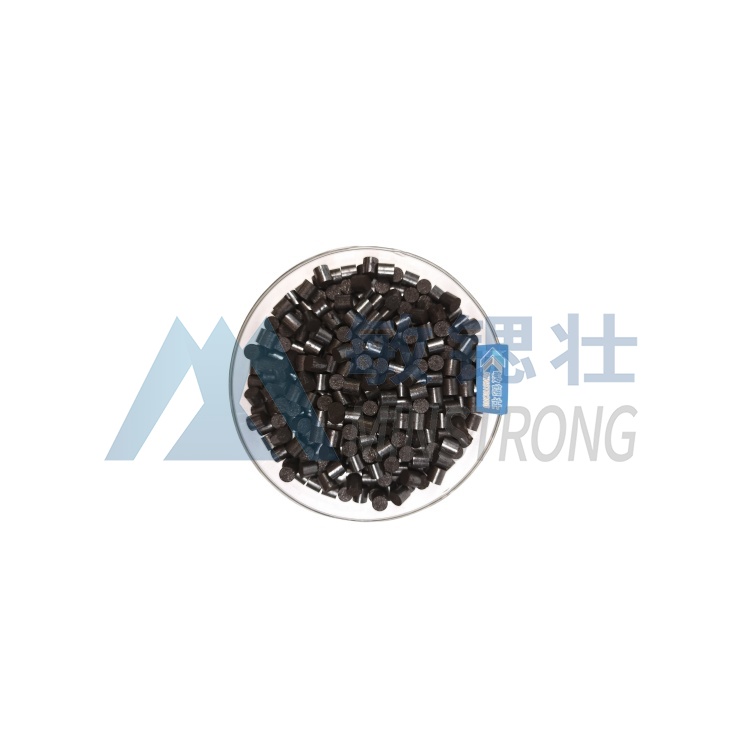
Ozone decomposition catalysts, as the core material for removing ozone (O₃), can efficiently convert O₃ into harmless O₂ at room temperature. Their service life is not a fixed value, but is directly determined by their stability. High-quality catalysts can extend their service life to over 8000 hours through stable activity performance and resistance to interference; conversely, insufficient stability will lead to rapid activity decay, requiring replacement in just a few thousand hours, significantly increasing operating costs.
Key Factors Affecting Stability: Directly Determining the Service Life Limit
The core cause of catalyst stability degradation is essentially the destruction of its structure and active components, mainly stemming from four types of factors, thus shortening the service life:
1.
Loss of active components: If the core active components (MnO₂, Pt, Co₃O₄, etc.) are not firmly bound to the carrier, they are prone to agglomeration or detachment due to airflow impact and thermal vibration, leading to a reduction in active sites. This is the main reason for stability degradation, directly causing the catalyst to enter the "failure period" prematurely.
2. Poisoning interference: Impurities such as sulfides, nitrogen oxides, and oil mist particles in the exhaust gas will form stable compounds with the active components or block the pores, leading to catalyst poisoning and deactivation. Ordinary catalysts in a 100 ppm sulfide environment experience a more than 30% decrease in activity within 200 hours, directly reducing their service life by more than 50%.
3. Temperature and Humidity Shock: High humidity (relative humidity > 80%) causes water vapor to adsorb onto the catalyst surface, covering active sites; extreme temperatures (<10°C or >100°C) damage the support structure and accelerate the agglomeration of active components. Both factors contribute to accelerated stability degradation and shortened service life.
4.
Support Structure Damage: If the support (honeycomb alumina, molecular sieve, etc.) lacks sufficient mechanical strength, it is prone to damage and collapse under airflow impact, leading to complete catalyst failure and immediate end of service life.
Direct Impact of Stability Degradation on Service Life
The "service life" of a catalyst is essentially the continuous operating time during which its activity remains above an acceptable threshold (usually purification efficiency ≥ 90%). Stability degradation and shortened service life are linearly related:
1.
Activity Degradation Rate Determines Service Life: Catalysts with high stability exhibit slow activity degradation. For example, a high-quality composite catalyst can maintain over 85% activity after 8000 hours of operation, resulting in a service life exceeding 2 years; while a catalyst with poor stability may see its activity drop below 70% after only 3000 hours of operation, requiring mandatory replacement.
2.
Interference Resistance Determines Service Life Stability: In complex operating conditions (such as high impurities in industrial applications or high humidity in civil applications), catalysts with high stability can withstand poisoning and temperature/humidity shocks, resulting in less service life fluctuation; conversely, they are prone to "sudden deactivation," leading to significantly shortened service life or even premature failure.
Improving Stability: The Core Measure for Extending Service Life
Through targeted technological optimization, catalyst stability can be enhanced, significantly extending service life:
1.
Optimization of Active Components and Support: Using "chemical bond anchoring technology," active components are fixed on the surface of a composite support (alumina-zirconia), and a core-shell structure is used to reduce agglomeration; a high-mechanical-strength honeycomb support is selected to improve impact resistance.
2.
Anti-Poisoning and Anti-Humidity Design: Pre-treatment devices (filter cotton, activated carbon layer) are used to intercept impurities; anti-sulfur components such as CeO₂ and TiO₂ are added to inhibit poisoning; a hydrophobic coating is applied to the support surface to reduce the impact of high humidity. 3. Operating Condition Control: Control the relative humidity of the exhaust gas to below 80% and the temperature within the range of 10℃ to 80℃ to avoid extreme operating conditions that accelerate stability degradation.
Quantitative Verification of Stability Determining Service Life
In a UV curing workshop of a printing company, a MINSLITE-B ozone decomposition catalyst (Pt-MnO₂ composite component, hydrophobic modified carrier) was used to treat ozone exhaust gas containing a small amount of sulfides and 70% humidity (concentration 1200 ppb). After 8000 hours of continuous operation, the purification efficiency still reached 95%, the activity retention rate was 88%, and the service life reached more than 2 years; while the ordinary catalyst used before replacement only operated for 3000 hours before the efficiency dropped below 85%, with a service life of less than 1 year.
A civil air purifier equipped with a modified MnO₂ ozone decomposition catalyst, after 1 year of continuous operation (approximately 8760 hours) in a high-humidity indoor environment (60%~75%), still maintained an ozone purification efficiency of over 90%, with only 8% activity decay; while the ordinary catalyst used during the same period saw its efficiency drop to 78% after 6 months, requiring filter replacement, thus shortening its lifespan by nearly half.
The stability of the ozone decomposition catalyst is the core variable determining its service life. Loss of active components, poisoning, and temperature and humidity shocks all shorten the lifespan by weakening stability. Through scientific structural design, anti-interference optimization, and operating condition control, stability can be significantly improved, extending service life, reducing replacement costs, which is also the core competitiveness of high-quality ozone decomposition catalysts.
Author: Hazel
Date: 2025-12-26

 Skype
 WhatsApp
