How is Copper Oxide Catalyst Made?
Copper oxide catalysts, due to their excellent catalytic activity and stability, are widely used in chemical synthesis, waste gas treatment, energy conversion, and other fields. Their preparation process directly affects catalytic performance, and different applications require specific preparation methods. The following is an analysis of several mainstream copper oxide catalyst preparation processes, their applicable scenarios, and their advantages and disadvantages.
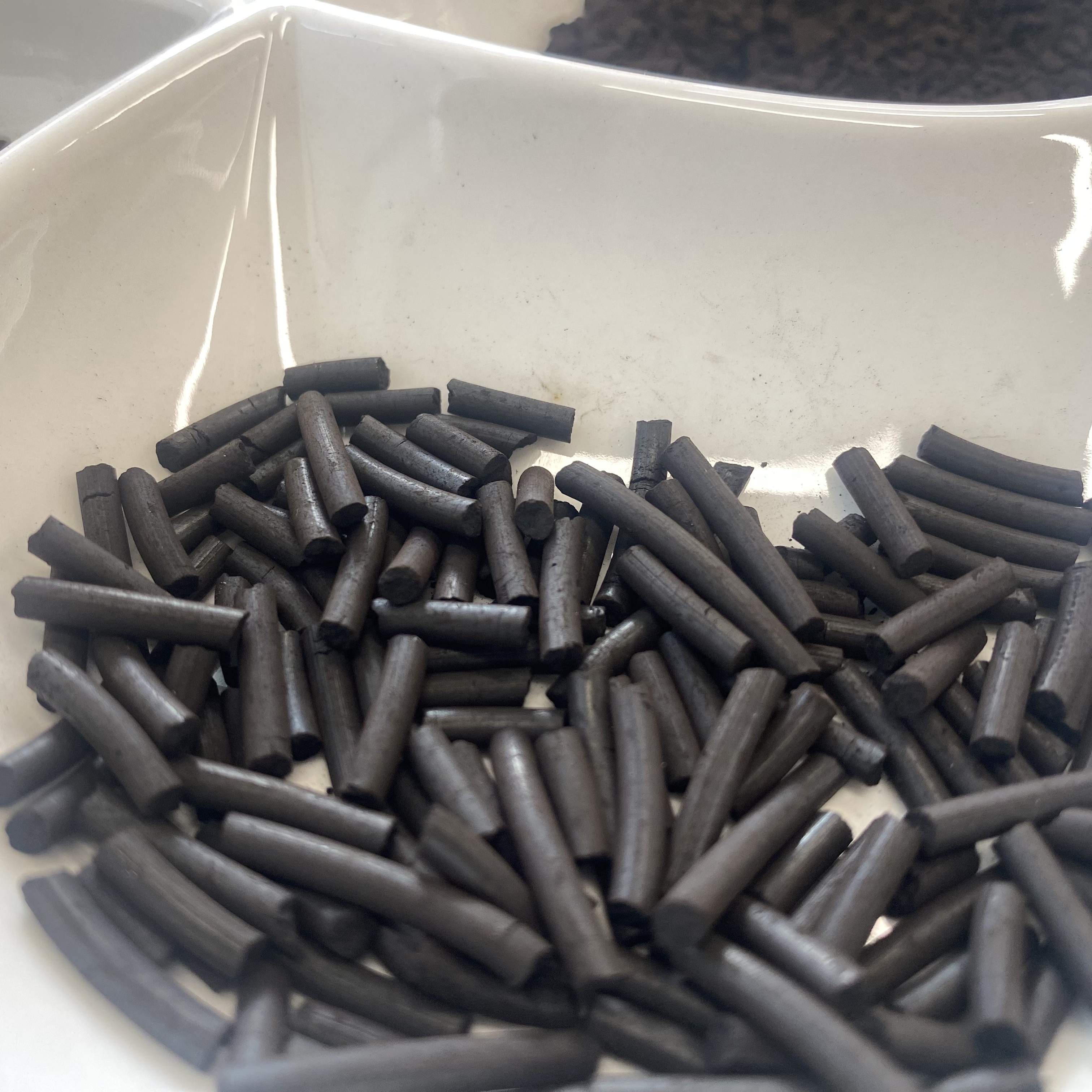
Precipitation Method: A Cost-Effective Option for Industrial Mass Production
The
precipitation method is one of the most commonly used processes for preparing copper oxide catalysts. Using copper sulfate or copper nitrate as the raw material, a precipitant such as sodium hydroxide or sodium carbonate is added to the solution to produce a precipitate of copper hydroxide or copper carbonate. After washing and drying, the solution is calcined and decomposed at 300-500°C to obtain copper oxide powder.
Applications: Industrial wastewater treatment, methanol oxidation to formaldehyde, and other large-scale chemical production processes.
Advantages: Simple operation, low raw material costs, and adjustable particle size through controlled precipitation conditions, making it suitable for mass production.
Disadvantages: Product particle uniformity is poor, small amounts of impurities are likely to remain, and catalytic activity and stability are slightly lower.
Sol-Gel Method: The preferred method for high-precision applications
The
sol-gel method involves hydrolyzing metal alkoxides to form a sol, which is then dried and calcined to produce the copper oxide catalyst. This process allows for precise control of the catalyst's chemical composition and microstructure, yielding nanoscale copper oxide with a high specific surface area (typically >100 m²/g). Applications: Fine chemicals, fuel cell oxygen reduction reactions, and other fields requiring extremely high catalytic activity.
Advantages: High product purity, uniform particle dispersion, and excellent catalytic activity and selectivity.
Disadvantages: High raw material costs, long process cycles, and difficulty in large-scale production.
Impregnation Method: The Core Process of Supported Catalysts
The
impregnation method is often used to prepare supported
copper oxide catalysts. A support, such as alumina or molecular sieve, is immersed in a copper salt solution. Once the support is saturated with adsorption, the copper salt is dried and calcined to decompose into copper oxide, which is then loaded onto the support surface.
Applications: Applications requiring enhanced mechanical strength for catalysts, such as automotive exhaust purification and CO oxidation reactions.
Advantages: The support enhances catalyst stability, reduces precious metal usage, and maintains cost control.
Disadvantages: Limited copper oxide loading (typically <20%), and uniformity is significantly affected by the support's pore structure.
Solid-Phase Reaction Method: A Practical Technology for High-Temperature Catalysis
In the
solid-phase reaction method, copper powder and an oxidant are mixed in appropriate proportions and reacted directly at high temperatures (600-800°C) to form a copper oxide catalyst. This process requires no solvent and produces a highly crystalline product.
Applications: Catalytic reactions in high-temperature environments, solid oxide fuel cells, etc.
Advantages: Simple process, low energy consumption, and excellent high-temperature resistance.
Disadvantages: The product has a small specific surface area and low catalytic activity, making it suitable only for applications where activity requirements are low.
Author: Hazel
Date: 2025-09-18

 Skype
 WhatsApp
