How do the acid-base sites on the alumina support affect catalytic efficiency?
A company specializing in the research and production of
a series of environmentally friendly catalytic materials, including ozone decomposition catalysts, carbon monoxide catalysts, Hopcalite catalysts, manganese dioxide, copper oxide, VOC catalysts, and hydrogen peroxide catalysts, is compiling this information to provide highly adaptable catalytic material solutions for various environmental treatment scenarios, hoping to be helpful to everyone.
Our main customer base includes: industrial waste gas treatment companies, ozone purification equipment manufacturers, motor vehicles, ships, exhaust gas treatment companies, petrochemical and chemical industry environmental protection companies, coating and printing companies, VOCs treatment companies, municipal and industrial wastewater treatment companies, metallurgical and thermal power plant flue gas treatment manufacturers, laboratories, enclosed space air purification equipment manufacturers, environmental engineering general contractors and operation and maintenance companies, etc.
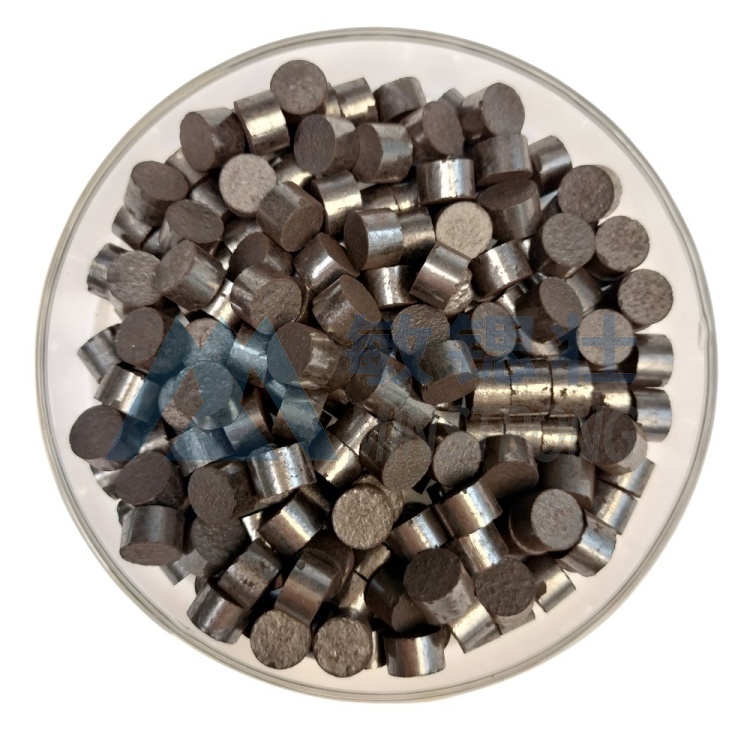
I. Types of Core Acid-Base Sites on Alumina Carriers
Due to lattice defects and surface hydroxyl group interactions, alumina carriers form natural amphoteric acid-base sites on their surface, which can be flexibly controlled through processing. This is a core advantage that makes them suitable for multi-scenario catalysis:
• Lewis acid sites: The core is surface-coordinated unsaturated Al³⁺, which can accept electron pairs and efficiently activate reactants containing lone electron pairs, such as VOCs, NH₃, and CO;
• Lewis base sites: Primarily surface O²⁻, which can donate electron pairs and rapidly activate hydrogen-containing or electron-deficient reactants such as H₂O and carboxylic acids.
II. Three Key Mechanisms by Which Acid-Base Sites Affect Catalytic Efficiency
1. Activating Reactants and Lowering the Reaction Energy Barrier
Acid-base sites, as auxiliary active sites, directly interact with reactants in a targeted manner, breaking chemical bonds and activating the reaction, thus accelerating the reaction process. For example, in industrial organic waste gas VOCs treatment, in the low-concentration toluene degradation scenario, the Lewis acid sites of the alumina carrier can quickly adsorb and activate toluene molecules, weakening the chemical bonds of the benzene ring; in indoor air ozone purification, the basic sites on the carrier surface can efficiently cleave O₃ molecules, generating reactive oxygen species. The synergistic effect of these two types of sites with the main active components can reduce the toluene ignition temperature by 50-80°C and increase the ozone decomposition efficiency to over 95%, effectively solving the problem of low-concentration pollutant conversion. This is a core reason why alumina carriers are widely used in environmental catalysis.
2. Regulating Active Components, Improving Stability and Selectivity
Acid-base sites anchor nanoscale active particles through Al-O-M (M is the active metal) chemical bonding, preventing sintering and aggregation under high-temperature conditions. Taking industrial tail gas CO oxidation treatment as an example, in high-temperature environments, the active metal particles of unmodified carriers tend to grow larger, while the acid sites of the alumina carrier can firmly fix the active metal, maintaining its nanoscale size of 2-5 nm. After long-term operation, the catalytic activity remains above 90%, while also reducing the amount of precious metals used. Furthermore, the electron transfer between acid sites and active metals optimizes the adsorption strength of CO, preventing the adsorption and retention of the product CO₂, resulting in a reaction selectivity close to 100% with no by-products.
3. Enrichment of Reactants and Optimization of Mass Transfer Pathways
For the industry pain point of treating low-concentration pollutants, the targeted adsorption and enrichment effect of acid-base sites is particularly crucial. For example, in the SCR denitrification scenario of flue gas from coal-fired power plants, the concentration of NH₃ in the flue gas is low. The acid sites of the alumina support can efficiently adsorb NH₃ molecules, enriching them on the surface of the active components, increasing the concentration by 3-5 times, significantly improving the reaction probability between NH₃ and NOₓ; in the treatment of low-concentration VOCs in the printing industry, the adsorption and enrichment effect of acid sites on esters and benzene compounds can solve the problem of difficult reactant activation at low concentrations, allowing the catalytic conversion efficiency to remain above 90%.
III. Main Application Scenarios and Optimization Suggestions
Based on the flexible control characteristics of acid-base sites, alumina supports have mature applications in many industries: In the environmental protection field, in addition to VOCs degradation and SCR denitrification, in industrial wastewater treatment, the alkaline sites of modified alumina supports can activate organic pollutants in water, synergistically improving the degradation efficiency with active components; in the petroleum refining field, in the diesel hydrotreating scenario, acid-modified alumina supports can assist in cracking large molecular sulfides, while anchoring the hydrogenation active components, improving desulfurization efficiency and oil quality. In practical applications, performance can be optimized through three methods: high-temperature calcination to enhance site strength, doping with SiO₂ to increase acid site density, and incorporating MgO to strengthen alkaline site activity, precisely matching different reaction requirements.
IV. Summary
The acid-base sites of alumina supports are the core of synergistic catalysis, not merely a support platform. Through three major mechanisms—activating reactants, regulating active components, and optimizing mass transfer—they directly affect catalytic efficiency and stability. Reasonable control of acid-base site characteristics is key to optimizing the performance of alumina-based catalysts and adapting to the needs of various industrial and environmental scenarios, and is also a core driver for promoting the efficient application of catalytic technology.
author: Hazel
date: 2026-01-22

 Skype
 WhatsApp
